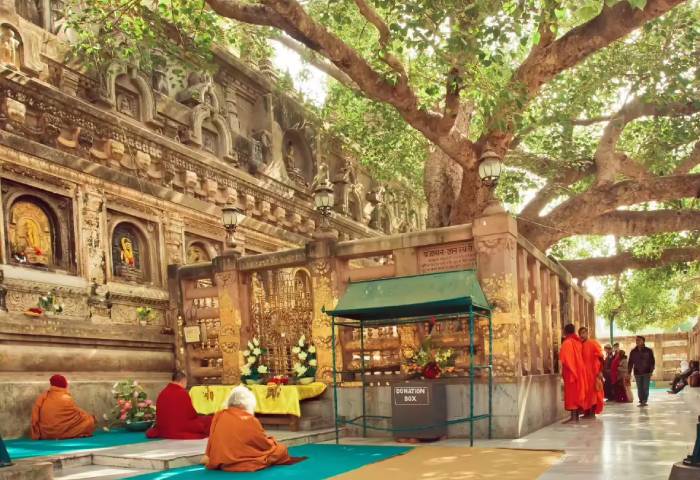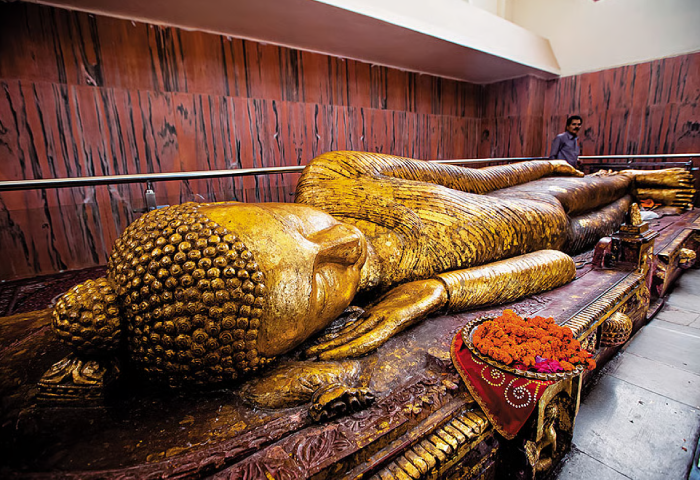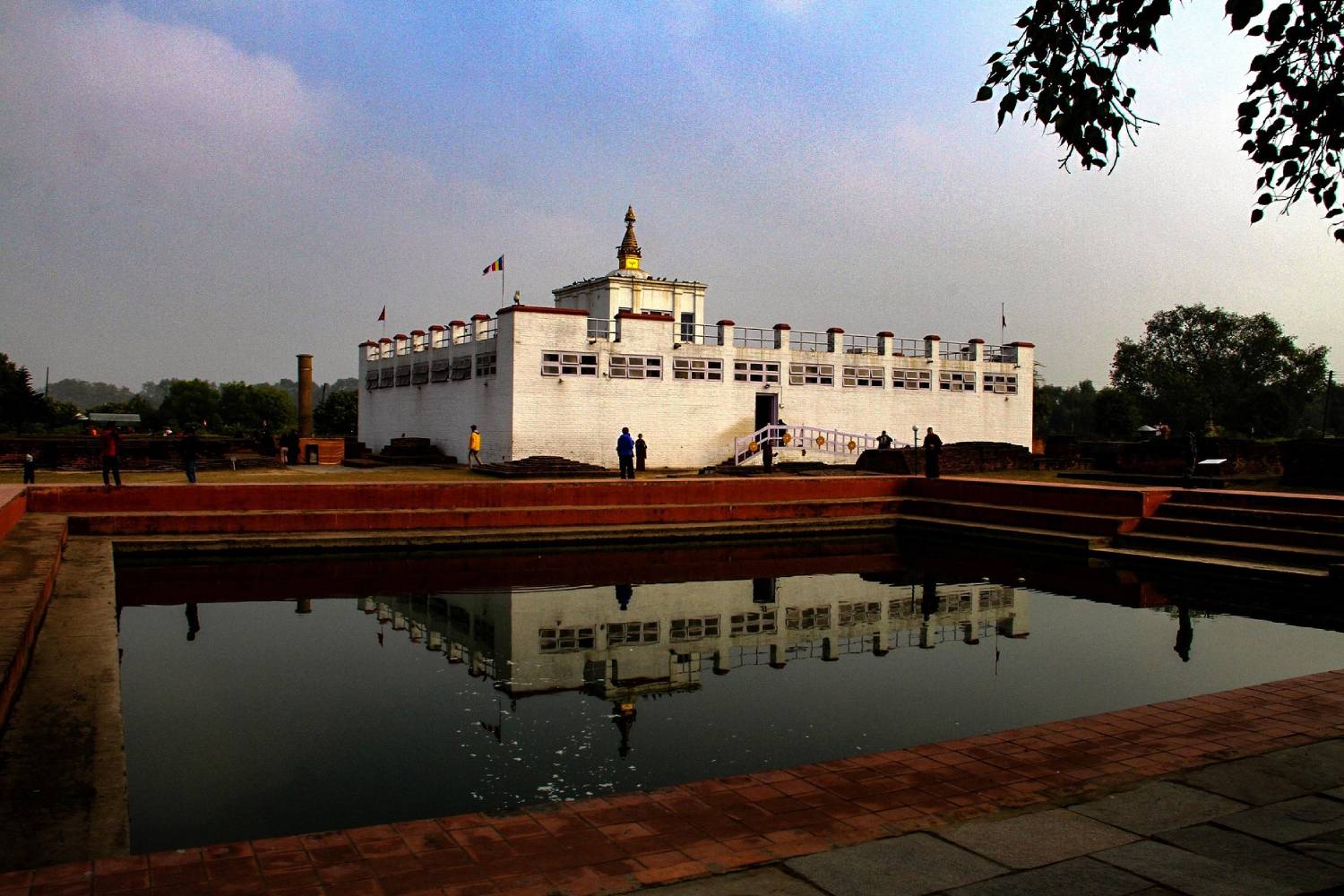
After enlightenment, Buddha delivered his first sermon here at Isipatana, setting in motion the timeless teachings that guide millions across the world.
After his enlightenment at Bodh Gaya, Buddha walked north and west to the Deer Park at Isipatana, near the holy city of Varanasi. There, in the company of five ascetics who had once been his companions, he sat and taught for the first time. The event is described in the texts as the "turning of the Wheel of the Dhamma" — the point at which the teaching became a living tradition. The place is now called Sarnath, and it has been a site of pilgrimage for more than two thousand years.
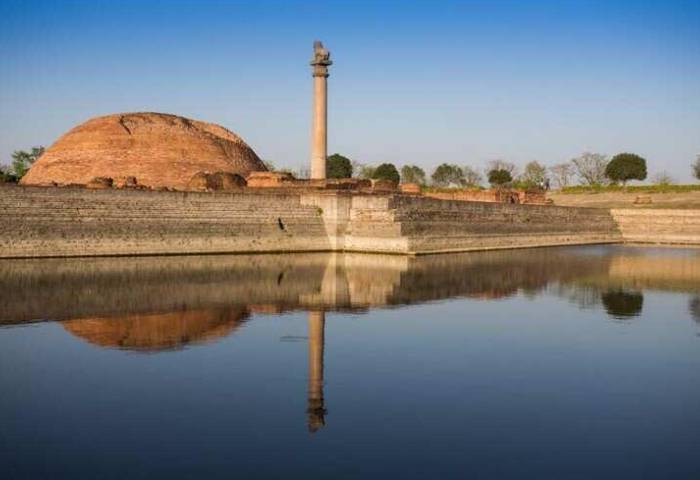
Sarnath flourished as a monastic centre from the Mauryan period through the Gupta era and beyond. Emperor Ashoka visited in the 3rd century BCE and erected one of his most celebrated pillars, surmounted by a capital bearing four lions back to back, separated by wheels on an abacus decorated with animals. That Lion Capital was later adopted as the national emblem of India. The column stands broken at Sarnath; the capital is housed in the Sarnath Museum.
Xuanzang visited Sarnath in the 7th century CE and described it as a thriving monastic complex with thirty monasteries housing three thousand monks. The site declined significantly after the 12th century and suffered extensive damage during the medieval period. Systematic excavations began under British administration in the late 19th and early 20th centuries.
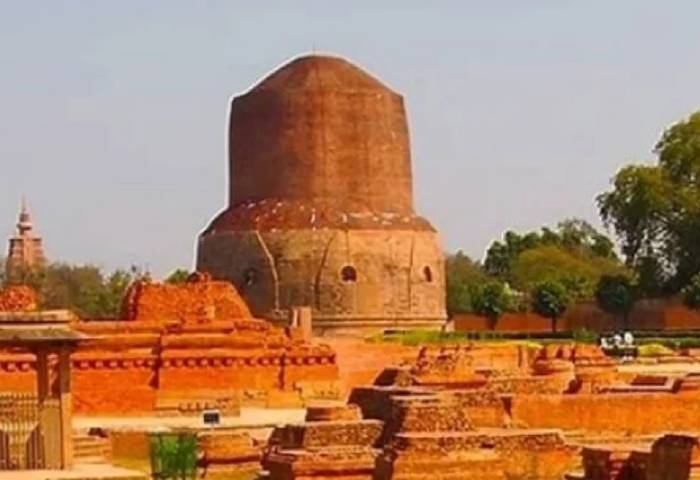
The Dhamek Stupa is the largest and most impressive structure remaining at Sarnath. It is a solid cylindrical tower approximately 28 metres in diameter and 43 metres high, faced in stone intricately carved with geometric and floral patterns. Its lower portions are generally dated to the Gupta period (5th to 6th century CE); its upper portions may represent a later rebuilding. The stupa is believed to mark the precise location of the first sermon, though scholars note some uncertainty. Tradition and the weight of continuous pilgrimage give the site its significance regardless.
A larger stupa, the Dharmarajika, once dominated the Sarnath complex. Built originally by Ashoka and enlarged by later rulers, it was partly demolished in the 18th century by a local dignitary seeking building materials. Its foundation remains, and the relic casket discovered within it is now in the Kolkata Museum. The loss of the Dharmarajika stupa is a significant one for the architectural heritage of Sarnath.
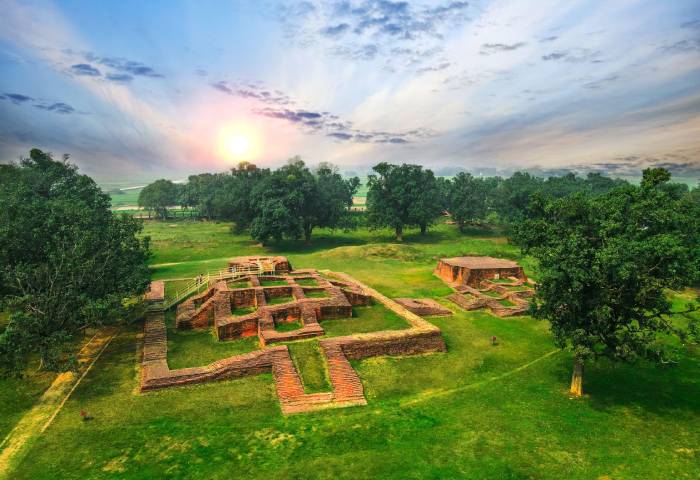
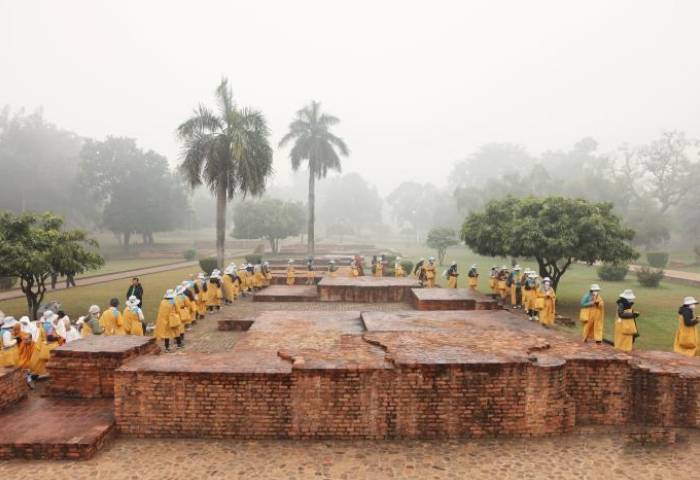
Within the archaeological park, the foundations of the Mulagandhakuti — the "Fragrant Chamber," the personal residence of Buddha when he stayed at Sarnath — can be seen. The name reflects the tradition of monks offering fragrant flowers within. A modern temple of the same name stands adjacent to the park.
The broken shaft of Ashoka's polished sandstone pillar stands at the site. The Lion Capital removed from its top is displayed in the Sarnath Archaeological Museum, which also houses one of the finest collections of Gupta-period Buddhist sculpture anywhere — including the celebrated seated Buddha in the Teaching posture (dharmachakra mudra), dated to the 5th century CE and considered a masterpiece of Indian art.
A short distance from the main archaeological park stands the Chaukhandi Stupa — believed to mark the spot where Buddha met his five former companions as he arrived from Bodh Gaya. It is a large earthen mound surmounted by an octagonal Mughal tower, added in the 16th century to commemorate a visit by the Mughal prince Humayun. The combination is unusual and historically layered.
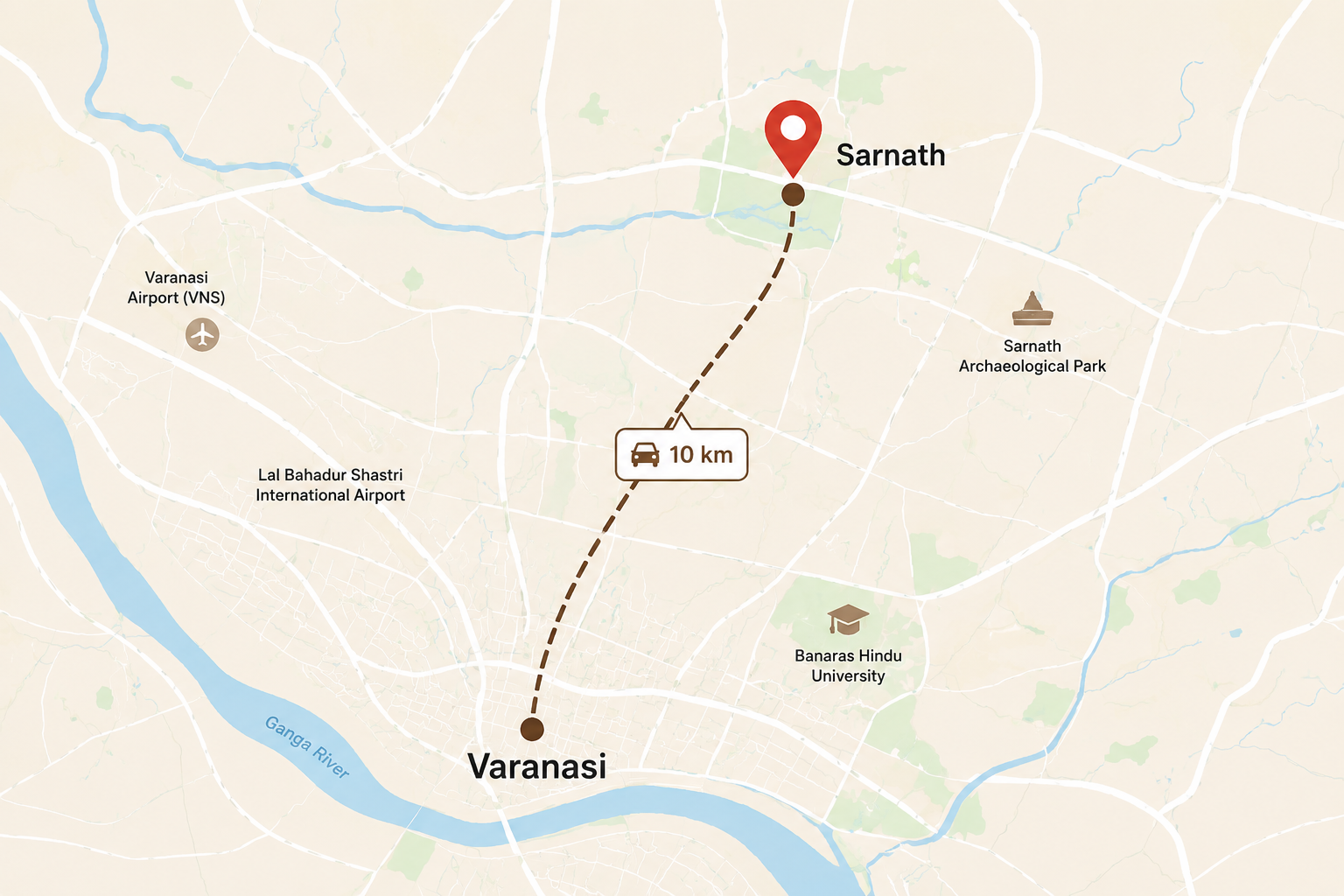
Sarnath lies approximately 10 kilometres north of Varanasi (Benares), which is served by air, rail, and road from across India. The archaeological park and museum are open daily except Fridays. The most concentrated period of Buddhist activity at Sarnath is around Buddha Purnima, when relics from the Sarnath Museum are brought out in procession.